
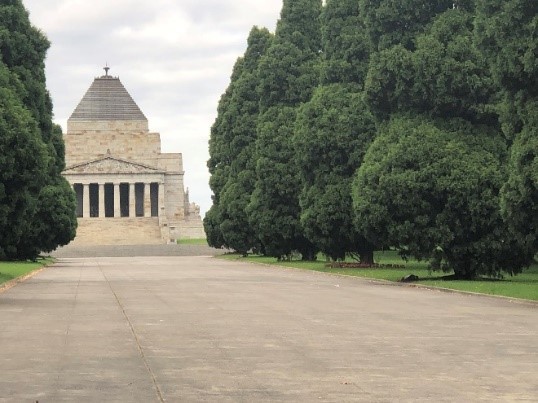
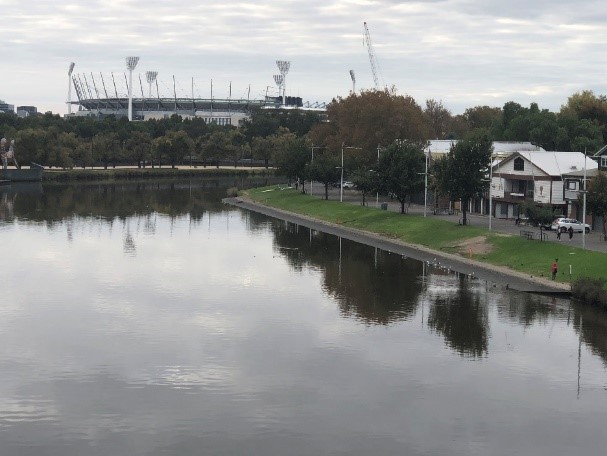
Living and working in Melbourne during the current pandemic lockdown means our vibrant city has effectively ground to a halt. Emptiness is an all-pervading descriptor.
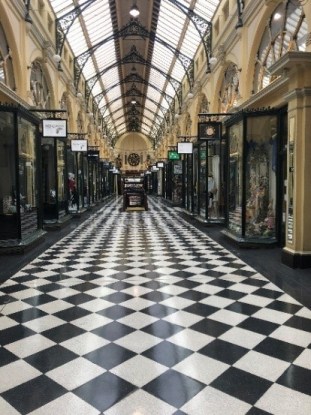
I now walk through once-busy arcades and renowned laneways, past eateries and across boulevards and thoroughfares and bear witness to a barren, empty streetscape. I recall the stark, post-apocalyptic images of popular fiction from the 1960’s when the ‘H Bomb’ fears merged with the plot-lines of mainstream media resulting in ‘sole survivor’ movies set against a backdrop of a desolate, empty city. It feels like I am there.
There are few visible signs of activity. Shops have closed, stock-lines have been removed, some businesses are shuttered. Clearly many are not intending to re-open. Collins Street, once the citadel of the city’s self-assured business elite, is sullen and empty.
Dining alfresco has disappeared and chairs and tables are stacked inside locked doors or behind grubby windows. The ubiquitous, hastily-written signs such as “Temporarily Closed” or “Closed Until Further Notice’ or “We Will Be Back” feel more like a helpless plea given there is no scenario, much less a plan, as to when, or how, these business will re-open.
Some convenience stores have closed and those that stay open have reduced hours. The shelves are under-stocked. Security guards remind us of social distancing. Hand sanitising is offered before we enter. Staff can no longer say when, or whether, some basic food items will be available.
Shop assistants, some of whom I have known for years, fear getting too close and it seem as if they would prefer to be in the safety of their own homes. Conversation is stilted and awkward. We talk of little else other than the virus or of the emptiness.
Buskers have disappeared and the familiar hubbub of city-life has disappeared with them. People walk solo or in pairs. Gatherings are not permitted. People speak in hushed tones. I sense their apprehension. Laughter seems to be an inconsiderate and incongruous display in the midst of unrelenting death-reporting by the daily media.
The morning and afternoon peak-hour flows of pedestrians were comforting in the same way that one is comforted by the reassuring and timeless ebb and flow of the tides. Now this rhythm of city life has gone and is as jarring as would be the loss of the age-old certainties of the changing tides.
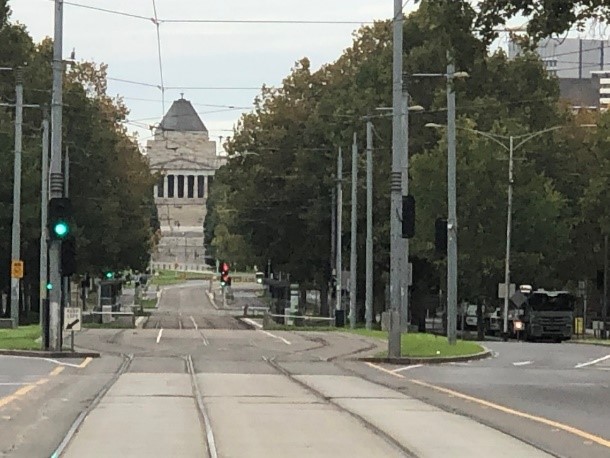
Trams still provide their familiar ‘rattle’ up Collins and Bourke Streets but they are near-empty and commuters sit alone, often wearing face masks. Construction workers are the only cohort with any presence and their fluro-jackets are the omni-present workwear in the city these days. At weekends, when trams are less frequent and the construction workers are not on site, the emptiness of the city becomes an even starker reality.
People look tepidly at each other in the street. We smile faintly, more out of an acknowledgement of our predicament rather than a desire to engage. Talking is a risk. Don’t get too close. Social distancing is an oxymoron. Distancing prevents socialising. ‘Act as if you have Covid’ as one prominent politician said and we become cautious of each other as a result.
My early morning walks are taken during daylight hours due to safety concerns. The homeless seem more anxious and more emboldened as the reduced foot traffic in the city means fewer donations and they slide into a more frantic struggle for daily survival.
These photos capture the effects of the lockdown and are a silent narrative of life in an empty city.


“But, Lord! how sad a sight it is to see the streets empty of people, and very few upon the ‘Change. Jealous of every door that one sees shut up, lest it should be the plague; and about us two shops in three, if not more, generally shut up”.
Diary of Samuel Pepys, Wednesday, 16 August 1665.
 riableathman.com